
Reviewed · WALKING TOURS
Helsinki: Small-Group Walking Tour with a Local Guide
Helsinki reveals itself on foot. This 2.5-hour walk links grand squares, seaside life, public art, wartime scars, and the remarkable Central Library Oodi, giving you a useful first look at Finland’s capital. I especially like the small group of no more than eight people, which leaves room for questions, and the way the route connects daily life with major landmarks. The main drawback is that the tour goes out rain or shine, so poor weather could make the long walk less comfortable.
I also like the practical food advice at Market Square and the chance to hear local stories about statues rather than simply photograph them. Guides such as Jonna and Ioana have been praised for making Finnish history clear, warm, and entertaining. At $54 per person, the cost is fair if you want an informed introduction, but it is less attractive if you prefer to explore Helsinki quietly at your own pace.
In This Review
- Key points to know before you go
- Starting beneath Alexander II in Senate Square
- Uspenski Cathedral and the port side of Helsinki
- Market Square, Finnish food, and Baltic Sea life
- Havis Amanda and Helsinki’s statue stories
- Aleksanterinkatu and the unicorn block
- Three Smiths and the marks of World War II
- Helsinki Central Railway Station and the modern city
- Inside Central Library Oodi
- What the small group changes
- How much value do you get for $54?
- Who will enjoy this Helsinki walk?
- Booking details worth knowing
- Should you book this tour?
- FAQ
- How long does the Helsinki walking tour last?
- Where does the tour begin?
- What language is the tour conducted in?
- How many people can join the small group?
- Does the tour operate in bad weather?
- What is included in the price?
Key points to know before you go
- Eight-person limit: A very small group makes the walk more personal and keeps questions easy.
- A useful central route: Senate Square, Uspenski Cathedral, Market Square, Esplanade Park, the railway station, and Oodi all fit into one outing.
- More than monuments: The guide talks about groceries, sea swimming, food, architecture, local habits, and the effects of World War II.
- Oodi is the finale: You get a short look inside one of Helsinki’s most distinctive modern public buildings.
- Rain or shine: Wear clothing suited to the forecast, since this is a walking tour with no weather exception.
- Simple meeting point: Look for the guide in front of the Alexander II statue, wearing a black beanie and holding a blue Helsinki Walking Tour sign.
Starting beneath Alexander II in Senate Square
The tour begins in the middle of Senate Square, in front of the statue of Alexander II. This detail matters because other walking groups may gather nearby at the same time. Look for the guide with a black beanie and blue sign, rather than joining the first group you see.
Senate Square gives you a strong opening lesson in Helsinki’s past. The white Lutheran Cathedral dominates the square, while Helsinki University and the old Senate buildings frame the rest of the space. Your guide explains the meaning of the Russian czar’s statue and the complicated links between Finland and Russia.
I like this start because it gives the city a clear political and architectural setting. You are not just looking at a handsome square. You are learning why these buildings are here and how Helsinki’s public spaces reflect earlier periods of Finnish rule.
The guide also invites questions from the beginning. That is useful if you are trying to understand Finland’s place between East and West, or if you want to ask about something you noticed while arriving in the city. The small group should make this exchange easier than on a large coach or crowded free walk.
More Walking Tours:
- A Finntastic Walking Tour in Helsinki
★ 5.0 · 700 reviews - Epic Helsinki: English Speaking Walking Tour
★ 4.9 · 192 reviews - Helsinki walking tour with a city planner
★ 5.0 · 175 reviews
Uspenski Cathedral and the port side of Helsinki
From Senate Square, the route heads toward the port and the red-brick Orthodox Cathedral of Uspenski. Its appearance differs sharply from the pale Lutheran Cathedral, so seeing both early in the tour helps you understand Helsinki’s mix of religious and cultural influences.
The walk toward the harbor begins to shift the mood. Senate Square feels formal and civic. The port feels practical and tied to everyday movement, trade, food, and the sea. Your guide uses this part of the route to talk about Helsinki as a working capital rather than a collection of postcard buildings.
The pace is intended to be easy, with time for questions and short stops. That said, you should still wear comfortable shoes. Two and a half hours on city streets is manageable for most people, but it is not a seated sightseeing trip.
Market Square, Finnish food, and Baltic Sea life
Market Square is one of the most useful stops for your own time in Helsinki. The guide explains what locals buy for groceries and gives suggestions for places to eat and drink after the walk. That practical information can save you from choosing a meal at random later in the day.
The food discussion is not treated as a separate cooking lesson. Instead, it fits into a larger explanation of Finnish daily life. You get a sense of how the market works and why the harbor remains important to the city.
If conditions are right, you might see locals swimming or relaxing in the Baltic Sea. This is a small detail, but it helps show a side of Helsinki that a monument-only route would miss. The sea is not just scenery here. It is part of how people use the city.
Market Square can also be exposed to wind and rain. Since the tour operates in all weather, bring a proper outer layer rather than relying on a light jacket. The supplied advice is simple: dress for the conditions.
Havis Amanda and Helsinki’s statue stories
The route continues to Havis Amanda, one of the city’s best-known statues. The important part is not only the sculpture itself, but the meaning it holds for many people in Helsinki. Your guide explains why the statue can inspire strong local feeling and how public art becomes part of a city’s shared identity.
This is one of the tour’s better ideas. A guide can point out dozens of statues, but the worthwhile stop is the one that explains how a city relates to them. You get a story with the image, not just another name to remember.
After Havis Amanda, the walk passes through Esplanade Park. Here you see the man that the seagulls love the most, a playful local reference that adds humor to the route. The tour’s strongest guides appear to mix this sort of light observation with solid information, keeping the walk from becoming a string of dates and official names.
A few more trips worth putting on the shortlist
- Helsinki: Sightseeing Canal Cruise with Audio Commentary
★ 4.5 · 1,299 reviews - From Helsinki: Nuuksio National Park Half-Day Trip
★ 4.8 · 688 reviews - Helsinki: Tallinn Guided Day Tour with Ferry Crossing
★ 4.6 · 670 reviews - Helsinki: Hop-On Hop-Off City Bus Tour
★ 4.2 · 585 reviews
Aleksanterinkatu and the unicorn block
The route then moves along Aleksanterinkatu, one of Helsinki’s active central streets. This section gives you a feel for ordinary city movement, shops, public spaces, and the connection between the harbor area and the commercial center.
You also hear about the unicorn block, an unusual detail that gives the walk some local flavor. It is the kind of small reference you might miss if you simply followed a map between the main sights.
I appreciate that the tour does not rush from one famous building to the next. Streets such as Aleksanterinkatu help you understand how the center is used from day to day. The tradeoff is that this is still a group route, so you will not have unlimited time to browse or stop inside shops.
Three Smiths and the marks of World War II
At the end of Aleksanterinkatu, the Three Smiths statue provides a direct connection to the Second World War. The sculpture was damaged during wartime bombings, and the guide uses that visible mark to explain Finland’s difficult period and the effects that continue to shape modern life.
This may be the most valuable historical section for anyone who knows little about Finland. The tour does not treat the war as a distant chapter. It connects the period to the city you are walking through now.
A good city walk should help you read what you see. The damaged statue does exactly that. Instead of offering only broad national facts, the guide points to a physical object in the street and explains what happened to it.
The subject is serious, but the walk includes lighter stops before and after it. That balance matters. You receive context without spending the entire tour in a lecture.
Helsinki Central Railway Station and the modern city
The railway station is another useful orientation point. It helps tie the older central streets to the modern transport network and gives you a sense of Helsinki’s compact core.
From there, the tour reaches the area around the Finnish Parliament, the Music Centre, and Kiasma Contemporary Art Museum. This cluster presents a different Helsinki from the one seen at Senate Square and Uspenski Cathedral. The city’s older political and religious buildings give way to modern public institutions, music, art, and civic design.
The route therefore has a clear visual progression: imperial-era square, harbor and market, central shopping streets, wartime memory, transport, and contemporary culture. That structure makes the tour more useful than a list of unrelated stops.
Inside Central Library Oodi
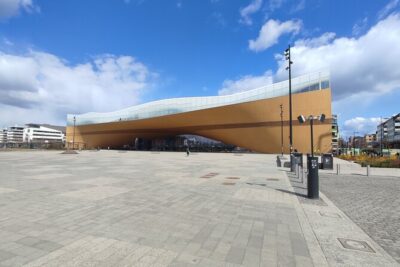
The final sightseeing stop is Central Library Oodi. You take a short tour inside and see its distinctive modern interior before the experience ends.
Oodi is especially worthwhile because it represents public life in present-day Helsinki. It is not simply a place to borrow books. The building itself is a major part of the visit, and the guide helps you notice its design rather than treating it as a quick photo stop.
The interior visit also gives your feet a brief change from the pavement. Do not expect an extended architectural tour or a long period to explore independently. The information describes this as a small tour inside the library, so think of it as a focused introduction.
There is a small point to clarify before booking. The route description finishes at Oodi, while the activity information also says the activity ends back at the meeting point. Check the exact end arrangement when you reserve, especially if you have a train, ferry, or timed museum visit afterward.
What the small group changes
The maximum group size is eight people. That is one of the strongest reasons to choose this walk instead of a larger city tour.
A small group lets the guide keep the pace conversational. You can ask about food, Finnish history, architecture, or local habits without waiting for a long line of people to move along. Past guides including Jonna and Ioana have been praised for being prepared, friendly, and good at answering questions.
Jonna has also been praised for combining a love of history with knowledge of local life. That combination is important. A guide who only lists dates can make a city feel remote. A guide who only tells personal stories may leave you without a clear picture of the past.
Guide quality can vary from one departure to another, so it is best to treat the named guides as examples rather than a promise that one specific person will lead your tour. The consistent strength described for the experience is the personal, interactive approach.
How much value do you get for $54?
At $54, you are paying for a guided introduction rather than transportation or entry tickets. The guide and walking tour are included, but hotel pickup and drop-off are not.
I think the price works best for a first day in Helsinki. You see major sights, learn how the center fits together, receive food suggestions, and finish with a better idea of what deserves more of your own time. The walk can also help you decide which museums, neighborhoods, or restaurants to visit afterward.
The value is weaker if you already know central Helsinki well or plan to visit every stop independently with a guidebook. The route covers public places, and there is no special admission included that you could not otherwise arrange.
The excellent rating of 4.9 from 58 reviews supports the idea that the experience delivers what it promises, especially in guide quality and overall clarity. The recurring praise focuses on friendly presentation, useful historical context, an easy pace, humor, and time for questions. One four-star assessment still found it very informative, while leaving room for the simple truth that not every guided walk will suit every pace or interest.
Who will enjoy this Helsinki walk?
I would recommend it most to first-time visitors who want to get their bearings quickly. It is also a good fit if you enjoy public art, architecture, history, and local stories but do not want a formal museum-style lecture.
The tour suits you particularly well if you want:
- A compact introduction to central Helsinki
- A guide who can explain Finnish history in plain language
- Suggestions for food and drinks near Market Square
- A small group where questions are welcome
- A mix of old buildings, modern design, sea views, and public spaces
You may want a different plan if you dislike walking in uncertain weather, need a very slow pace, or want long visits inside each attraction. The tour includes a short look at Oodi, not a full library visit, and the stops are designed to provide an overview.
You should also avoid confusing this group with another tour meeting near Senate Square at the same time. The black beanie and blue sign are the practical clues that identify the correct guide.
Booking details worth knowing
The tour lasts 2.5 hours, with starting times shown when you check availability. The live guide speaks English, and the group is limited to eight participants.
You meet in front of Alexander II’s statue in Senate Square. Hotel pickup and drop-off are not included, so plan to reach the square yourself. Bring weather-appropriate clothing, since the walk takes place rain or shine.
You can cancel up to 24 hours before the tour for a full refund. The reserve-now, pay-later option also gives you some flexibility when your Helsinki plans are still changing.
Should you book this tour?
Book it if you want a friendly, well-paced introduction to Helsinki that links major landmarks with ordinary life. The small group, local perspective, statue stories, wartime context, and Oodi visit give it more substance than a quick photo walk.
I would especially choose it near the start of a Helsinki stay, when food tips and city orientation have the most value. Skip it if you would rather wander alone, already know the central sights, or are unwilling to walk in rain or wind. For most first-time visitors, $54 is a reasonable price for a clear, personal starting point in the Finnish capital.
FAQ
How long does the Helsinki walking tour last?
The tour lasts 2.5 hours. Starting times are available when you check the booking calendar.
Where does the tour begin?
Meet in the middle of Senate Square, in front of the statue of Alexander II. Look for a guide wearing a black beanie and holding a blue Helsinki Walking Tour sign.
What language is the tour conducted in?
The live tour guide speaks English.
How many people can join the small group?
The group is limited to eight participants.
Does the tour operate in bad weather?
Yes. The tour takes place rain or shine, so bring clothing suited to the forecast.
What is included in the price?
The guide and walking tour are included. Hotel pickup and drop-off are not included.
Newest around Helsinki
- Helsinki: Guided Walking Tour with Local Guide★ 5.0 · 3 reviews
- Helsinki: Guided Kayak Tour in Eastern Helsinki Archipelago★ 5.0 · 3 reviews
- Minivan Departure Transfer Helsinki City to Helsinki Airport HEL★ 5.0 · 3 reviews
- From Helsinki: Guided Day Trip to Tallinn by Ferry & VIP Car★ 5.0 · 3 reviews
- Helsinki: Express Walk with a Local in 60 minutes★ 3.7 · 3 reviews
- Winter kayaking in Eastern Helsinki archipelago★ 5.0 · 3 reviews
- Private Porvoo Tour & Visit Runeberg’s National Poet House★ 5.0 · 3 reviews
- The Instagrammable Places of Helsinki with a Local★ 5.0 · 3 reviews
Walking Tours, compared.




Ranua Zoo Entry Ticket w/ Walking Tour and Lunch
Read our review →
Small-Group Walking Tour with City Planner Guide
Read our review →

Browse the lists this tour appears in