
Reviewed · WALKING TOURS
Helsinki: Architectural Highlights Guided Walking Tour
Helsinki tells its story through stone, glass, wood, and light. This three-hour walk offers a smart way to understand the Finnish capital, moving from Senate Square and neoclassical monuments to Alvar Aalto, contemporary design, and the much-loved Oodi library. I especially like the small groups of up to six and the chance to request a focus on a particular architectural period before you arrive.
I also like that the guide takes you inside several buildings rather than leaving you to admire facades from the pavement. Guides such as Zana have been praised for linking architecture with Finnish history, politics, daily life, food, language, and customs. The main drawback is the distance: you will walk 5 to 6 kilometers, rain or shine, and some office buildings may be closed on weekends.
In This Review
- Key points before you book
- Why Helsinki works so well for an architecture walk
- Senate Square and the city’s formal beginning
- From public institutions to Helsinki cafe design
- Aalto, Rautatalo, and the pleasures of looking up
- Helsinki Central Station and the move toward modernity
- Kansalaistori and Central Library Oodi
- Amos Rex, Kamppi Chapel, and a bold final stretch
- What the guide adds to the buildings
- Pace, group size, and practical comfort
- Is $56 a fair price?
- Who should book this Helsinki walk?
- FAQ
- How long is the Helsinki architecture tour?
- Where does the tour begin?
- What language is the tour conducted in?
- How many people are in the group?
- Does the tour run in bad weather?
- Is the tour suitable for wheelchair users?
- Should you book it?
Key points before you book

- A compact city told through many styles: See neoclassical, Gothic Revival, Art Nouveau, Nordic Classicism, Functionalism, modernism, and current Finnish design in one central route.
- Small-group attention: With no more than six participants, you can ask questions and request a stronger focus on a period, architect, or style.
- More than an exterior sightseeing walk: The route includes interiors such as the National Library, Academic Bookstore, Central Library Oodi, and several cafes and public spaces.
- A strong cultural introduction: The guide connects buildings to Finland’s politics, customs, national identity, and everyday life.
- Good use of three hours: The walk covers major sights from Senate Square to Kamppi, with frequent indoor stops to break up the weather.
- Bring proper clothing: Helsinki weather can change quickly, and the tour runs in all conditions.
Why Helsinki works so well for an architecture walk

Helsinki is unusually rewarding on foot because its central districts hold several centuries of design within a manageable area. You can begin with the formal neoclassical setting around Senate Square, pass Art Nouveau and early modern buildings, and finish with bold public architecture built for present-day life.
That variety gives this tour a useful shape. You are not simply ticking off famous buildings. You are watching Finland change through its architecture, from imperial-era formality to national self-confidence, practical modernism, and open public spaces.
The tour is led in English, and the activity description identifies the guide as a Sociology PhD student. That background helps explain why the walk reaches beyond architectural vocabulary. You can ask how buildings reflect Finnish society, how Helsinki presents itself as a design city, or why libraries and public buildings matter so much here.
I would not choose this tour only if you want a quick photo walk. It moves steadily and asks you to pay attention. The guide may pause over carvings, materials, entrances, and interior details that are easy to miss when you explore alone.
More Walking Tours:
- A Finntastic Walking Tour in Helsinki
★ 5.0 · 700 reviews - Epic Helsinki: English Speaking Walking Tour
★ 4.9 · 192 reviews - Helsinki walking tour with a city planner
★ 5.0 · 175 reviews
Senate Square and the city’s formal beginning
The meeting point is in front of Fazer Café on Kluuvikatu. From there, the route heads to Senate Square, where the city’s most formal face comes into view.
The square is the right place to begin because it makes Helsinki’s neoclassical identity easy to read. The guide spends about 15 minutes here, explaining the buildings and the ideas behind their arrangement. You get a sense of how architecture can project order and authority before the walk shifts into more varied styles.
Helsinki Cathedral is next, with a short guided stop and a pass by. Its pale exterior and prominent position make it one of the city’s essential landmarks, but the brief timing means you should not expect an extended interior visit. The value here is the connection between the cathedral and the wider square, not a long church tour.
The National Library of Finland receives more time, about 15 minutes. This is one of the route’s stronger stops because you can go inside and experience the building rather than just photograph it. The library adds a quieter, more intimate counterpoint to the grand scale of Senate Square.
From public institutions to Helsinki cafe design

The walk then shifts from major state and cultural buildings to places that show how Helsinki’s architecture is used in ordinary city life.
Robert’s Coffee Jugend is listed as a 10-minute visit. The name points to Helsinki’s Jugend, or Art Nouveau, tradition, and the stop lets you see how a historic interior can function as a modern cafe. This is the kind of detail that makes the tour useful: you learn to look inside places you might otherwise treat as a quick coffee stop.
Kappeli and Esplanadi follow. Kappeli is a short visit, while Esplanadi gets around 10 minutes. The park provides a change of pace and helps you understand the relationship between Helsinki’s buildings and open public areas. You are still in the central city, but the route is no longer only about monumental facades.
At the Johan Ludvig Runeberg monument, the guide brings in Finnish cultural identity and public memory. The stop is brief, but it broadens the walk beyond architecture. This is one reason the experience works as a city introduction: buildings and monuments become clues to the country’s language, arts, and national story.
Aalto, Rautatalo, and the pleasures of looking up
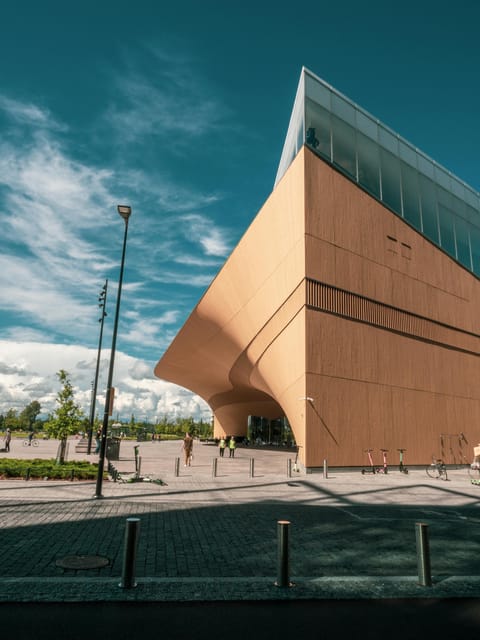
Academic Bookstore is one of the most important modernist stops. You will spend about 10 minutes here, with time to appreciate its design and interior spaces. The building is associated with Alvar Aalto, one of Finland’s best-known architects, and the visit gives you a chance to see how his ideas work at a human scale.
Rautatalo comes next, with a shorter five-minute visit. This is another stop where details matter. The guide can point out features, materials, and design choices that are easy to walk past if you are focused only on Helsinki’s larger landmarks.
One strength of the tour is its attention to small details. A guide such as Zana has been praised for explaining carvings on buildings, including those on a former bank. That kind of commentary turns an ordinary street into a visual puzzle. You begin to notice what a building is trying to say, not just whether you like its shape.
You should also keep your expectations flexible. One participant wanted more detail about the different architectural styles and their designers, but felt the tour focused mainly on two styles. If you want a survey of every period, tell the provider before the walk. The option to request a particular focus is useful, but you should state your priorities clearly.
A few more trips worth putting on the shortlist
- Helsinki: Sightseeing Canal Cruise with Audio Commentary
★ 4.5 · 1,299 reviews - From Helsinki: Nuuksio National Park Half-Day Trip
★ 4.8 · 688 reviews - Helsinki: Tallinn Guided Day Tour with Ferry Crossing
★ 4.6 · 670 reviews - Helsinki: Hop-On Hop-Off City Bus Tour
★ 4.2 · 585 reviews
Helsinki Central Station and the move toward modernity

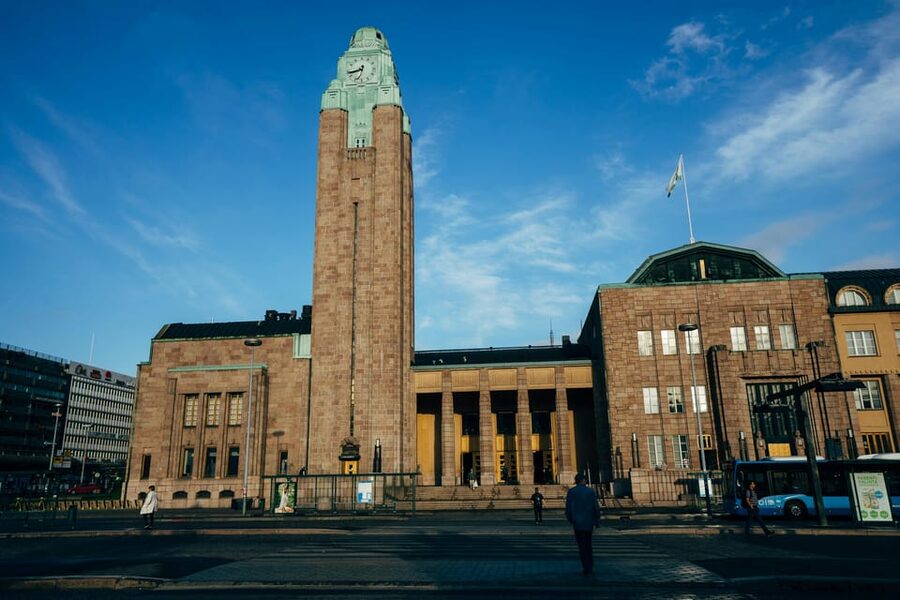
Helsinki Central Station is a natural turning point. The stop lasts about 10 minutes and introduces a different scale and purpose from Senate Square. This is architecture built for movement, arrivals, departures, and the daily rhythm of a capital city.
The station also helps connect earlier national styles with the more practical direction that Finnish design later took. The guide can place the building within the wider story of architects such as Eliel Saarinen and other major Finnish designers named along the route.
After the station, the walk reaches Fazer Café Sanomatalo for another 10-minute visit. This stop brings you into a newer urban setting and reinforces a recurring theme: Helsinki’s architecture is not confined to museums or famous monuments. Cafes, offices, bookstores, stations, and libraries all contribute to the city’s character.
The interior visits are especially helpful in poor weather. Helsinki can be cold, wet, or windy, and stopping inside several buildings keeps the pace comfortable. Still, do not mistake indoor breaks for a fully sheltered tour. You will be outside for much of the three hours.
Kansalaistori and Central Library Oodi

Kansalaistori is one of the route’s most memorable public spaces. The name refers to Citizen Square, and the area gives you a clear look at Helsinki’s newer civic ambitions. It is open, modern, and designed for people to gather around cultural institutions.
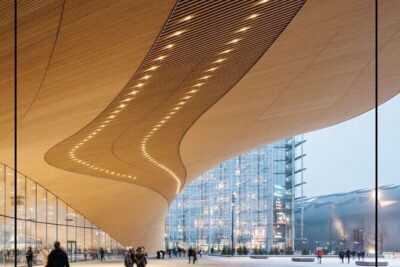
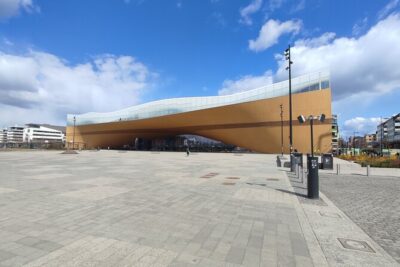
The highlight here is Central Library Oodi, where you spend about 20 minutes. Oodi is often the building that wins people over, even if they did not arrive as library fans. Its sweeping form and generous public interior show how Helsinki treats a library as a community center, not simply a room full of books.
You can expect the guide to explain both the building’s design and its social purpose. Several people have especially enjoyed seeing inside Oodi, describing it as a beautiful community facility and one of the essential sights for adults visiting Helsinki.
The 20-minute stop is long enough to appreciate the space, though not long enough for a full visit on your own. If Oodi is high on your list, consider returning later. The tour gives you the introduction and orientation. You may want extra time afterward to explore at your own pace.
Amos Rex, Kamppi Chapel, and a bold final stretch
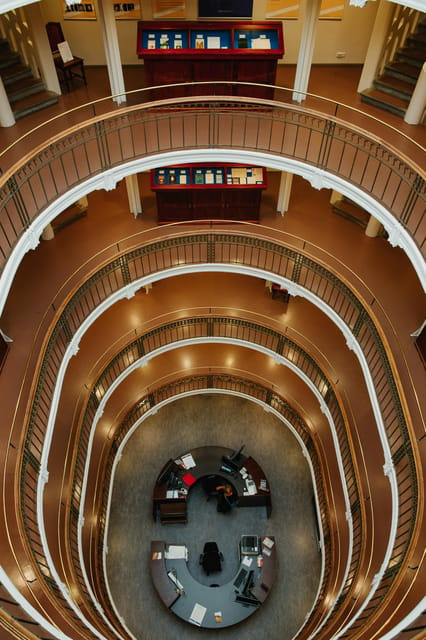
Amos Rex is visited briefly, with about five minutes of guided commentary. Its contemporary design adds a sharp contrast to the older city center. The museum is known for an unusual exterior relationship with the surrounding square, and the stop shows how Helsinki continues to experiment with public art and architecture.
Kamppi Chapel follows, again with a short guided stop and pass by. Its quiet wooden form is a striking change from the stone buildings earlier in the walk. Because the timing is brief, think of this as an architectural introduction rather than a full chapel visit.
The Pohjola Insurance Building is the final listed stop, with about five minutes inside or around the building. This adds another layer to Helsinki’s national architectural story and gives the guide a chance to point out decorative elements that might otherwise escape your notice.
The tour returns to Fazer Café Kluuvikatu. Ending where you started is practical, especially if you want to continue exploring central Helsinki afterward or stop for food and coffee.
What the guide adds to the buildings

The guide makes or breaks an architecture tour, and this experience benefits from a personal, conversational format. Zana has been praised for patience, warmth, and a strong grasp of Finnish history and Helsinki’s design details. One guest received what was effectively a private walk and appreciated the relaxed pace and extra attention.
The guide’s role is not just to name architects. The best moments connect a building to Finnish culture, public life, and the way people use the city. You may learn about architecture, art, food, language, customs, and politics in the same afternoon.
That breadth is a strength if you want a broad introduction to Helsinki. It may be less satisfying if you are an architecture student seeking a technical lecture on every architect and movement. Ask in advance for a more focused route if you want detailed treatment of Art Nouveau, Functionalism, Aalto, contemporary design, or another period.
Pace, group size, and practical comfort
The tour lasts three hours and covers 5 to 6 kilometers. That is a fair amount of walking, but the route includes stops inside cafes, libraries, bookstores, museums, and public buildings. The pace has been described as relaxed, with time for photographs and questions.
A group limit of six is a real advantage. You are not trying to hear a guide across a crowd, and you can shape the conversation around your interests. It also makes the walk suitable for a small family or group of friends who want something more personal than a large city tour.
The tour operates rain or shine. Wear weather-appropriate clothing and sensible shoes. Helsinki’s streets may feel easy at first, but several kilometers on hard city surfaces can become tiring, especially in cold or wet conditions.
Wheelchair users should note that the tour is not suitable for them. The route also includes office and public buildings whose opening hours can affect what you see inside. A weekday may be the better choice if interior access is especially important to you, since some office buildings may not be open on weekends.
Is $56 a fair price?
At $56 per person, this is not the cheapest way to see Helsinki’s center, but the price is reasonable for a three-hour small-group walk with a maximum of six participants. You are paying for interpretation, not transportation or food.
The value improves if you are new to Helsinki, have only an afternoon, or want an informed introduction before exploring alone. The walk covers many key buildings and adds context that is difficult to gather from a guidebook while you are moving through the city.
It is also good value for visitors who care about interiors. Entering buildings such as the National Library, Academic Bookstore, Oodi, and selected cafes gives you more than a sequence of exterior photo stops.
The value is weaker if you prefer to move slowly, spend a long time inside each building, or focus on one architectural movement in technical detail. In that case, use the customization option before booking and make your interests clear.
Free cancellation up to 24 hours before the start and the option to reserve without paying immediately make the booking less risky. Food, drinks, and transportation are not included, so budget separately for a cafe stop or later meal.
Who should book this Helsinki walk?
I would recommend it to first-time visitors, design fans, architecture students, and anyone who wants to understand Helsinki through more than its postcard sights. It suits people who enjoy asking questions and noticing details.
It also works well for a short stay. If you have only a few hours in the city, the route gives you a useful overview of central Helsinki, from imperial formality to modern public design.
Families with older children may enjoy Oodi, the cafes, and the variety of buildings, though younger children may find three hours of architectural explanation demanding. The walk is also a good choice for solo visitors because the small group format creates an easy setting for conversation.
I would hesitate if you dislike walking, need step-free access, or want a fully indoor activity. You should also choose a weekday when possible if entering office buildings matters to you.
FAQ
How long is the Helsinki architecture tour?
The tour lasts three hours and covers approximately 5 to 6 kilometers on foot.
Where does the tour begin?
Meet in front of Fazer Café on Kluuvikatu. The guide waits outside the cafe.
What language is the tour conducted in?
The live tour guide speaks English.
How many people are in the group?
The group is limited to six participants.
Does the tour run in bad weather?
Yes. The tour takes place rain or shine, so bring weather-appropriate clothing.
Is the tour suitable for wheelchair users?
No. The experience is not suitable for wheelchair users.
Should you book it?
Book this tour if you want Helsinki to make more sense, not just look attractive. The route covers a striking range of styles, includes several interiors, and links design with Finnish culture and public life.
I especially value the small group, the guide’s attention to details, and the substantial time at Oodi and other indoor sites. To get the most from the experience, go on a weekday if possible, wear good shoes, and tell the provider in advance which styles or architects interest you.
Skip it only if 5 to 6 kilometers is too much, you need wheelchair access, or you want a slow museum-style architecture lecture. For most visitors with an interest in buildings and a free afternoon, $56 buys a useful, human introduction to Helsinki.
Newest around Helsinki
- Helsinki: Guided Walking Tour with Local Guide★ 5.0 · 3 reviews
- Helsinki: Guided Kayak Tour in Eastern Helsinki Archipelago★ 5.0 · 3 reviews
- Minivan Departure Transfer Helsinki City to Helsinki Airport HEL★ 5.0 · 3 reviews
- From Helsinki: Guided Day Trip to Tallinn by Ferry & VIP Car★ 5.0 · 3 reviews
- Helsinki: Express Walk with a Local in 60 minutes★ 3.7 · 3 reviews
- Winter kayaking in Eastern Helsinki archipelago★ 5.0 · 3 reviews
- Private Porvoo Tour & Visit Runeberg’s National Poet House★ 5.0 · 3 reviews
- The Instagrammable Places of Helsinki with a Local★ 5.0 · 3 reviews
Walking Tours, compared.



Ranua Zoo Entry Ticket w/ Walking Tour and Lunch
Read our review →
Small-Group Walking Tour with City Planner Guide
Read our review →

Browse the lists this tour appears in